Welcome back to the blog! As a fisherman, my heart naturally leans towards the water, but I have a deep respect for our friends in the woods. Often, fishing and hunting are lumped together as “outdoor sports,” but anyone who has done both knows they are worlds apart in practice, pacing, and philosophy.
Today, we’re going to break down the key differences Fishing vs. Hunting– and surprising similarities – between casting a line and stalking game. Whether you’re a die-hard angler, a seasoned hunter, or someone curious about both, let’s explore what makes each of these ancient pursuits so unique.
The Tale of Two Outdoorsmen
At their core, both fishing and hunting are about connecting with the natural world in a very primal way. They both require you to step away from the noise of modern life, read the environment, and understand the creatures that inhabit it. However, the path to that connection is what sets them apart.
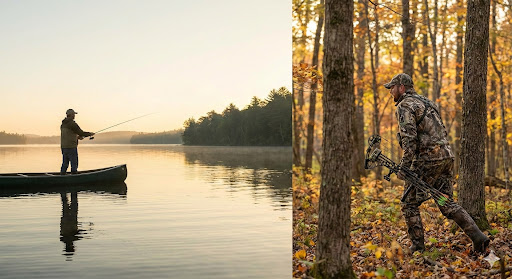
Image 1: A visual comparison of the angler’s serene wait and the hunter’s active stalk.
The Art of Patience vs. The Thrill of the Chase
This is perhaps the biggest psychological difference.
Fishing is often described as a meditative experience. You find your spot, you cast your line, and then… you wait. It’s a game of patience and subtlety. You’re trying to trick a fish into biting, using lures that mimic their food. The excitement comes in sudden bursts – the tug on the line, the hookset, the fight. But between those moments, there’s a lot of quiet contemplation.
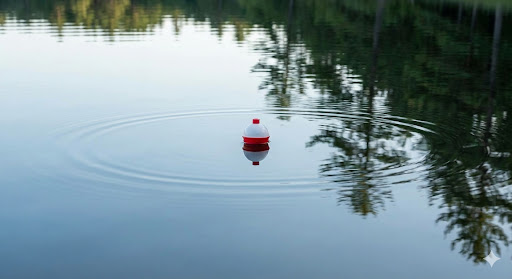
Image 2: The bobber sits on the water, a perfect symbol of the patience required in fishing.
Hunting, on the other hand, is more about the active pursuit. Whether you’re spot-and-stalking in the mountains or sitting in a tree stand, your senses are on high alert every single second. You’re looking for sign, listening for a twig snap, playing the wind. The adrenaline builds slowly over hours or days, culminating in a single, intense moment that can be over in seconds. It’s a high-stakes game of stealth and strategy.
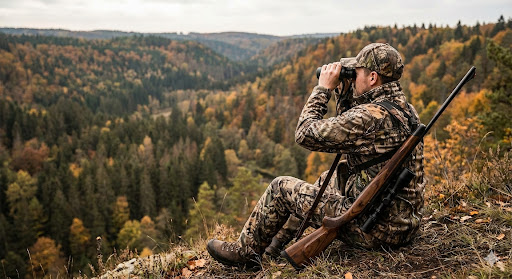
Image 3: A hunter scanning the landscape, embodying the active, observational nature of the hunt.
Gear and Accessibility: How Easy Is It to Start?
This is where fishing often wins new recruits.
You can get started fishing with a very basic rod and reel combo, some hooks, and a container of worms for under $50. You don’t need a boat; there are countless public lakes, rivers, and ponds where you can fish from the bank. It’s a low-barrier-to-entry sport that anyone of any age can try.
Hunting has a steeper learning curve and a higher initial cost. You need a weapon (rifle, shotgun, or bow), which requires a significant investment and, in the case of firearms, safety courses and permits. You need specific clothing for camouflage and weather, scent-control products, and, most importantly, access to land, which can be a major hurdle if you don’t own property or have connections.
The Harvest, Ethics, and Conservation
Both fishing and hunting can put delicious, organic food on your table. There’s a profound sense of satisfaction and connection that comes from harvesting your own meal.
However, fishing offers a unique option that hunting does not: catch-and-release. You can enjoy the thrill of the fight, admire the fish, and then let it go to swim another day. This makes fishing more accessible for those who might be uncomfortable with the finality of taking an animal’s life.
In hunting, the goal is a clean, ethical kill. There is a great deal of respect and emotion involved in taking a life to feed yourself or your family. It’s a heavy responsibility that hunters take very seriously.
It’s also important to remember that both anglers and hunters are some of the world’s greatest conservationists. The fees from licenses, tags, and excise taxes on gear fund the vast majority of wildlife management and habitat preservation efforts in North America.
Social vs. Solitary: What’s Your Vibe?
Finally, consider the social aspect.
Fishing is incredibly flexible. It can be a deeply solitary experience, just you and the water at dawn. But it can also be a highly social one. Think of sitting on a bank with friends, chatting and laughing while you wait for a bite, or being on a boat with your buddies.
Hunting is generally a more solitary pursuit. Success often depends on silence and stealth, meaning you’re on your own for most of the day. The social part comes at the camp before and after the hunt, sharing stories and camaraderie, but the act itself is often a lonely one.
Conclusion
So, which is “better”? There’s no right answer. It depends on what you’re looking for in your outdoor experience. Do you crave the meditative patience of fishing, with its low barrier to entry and option for catch-and-release? Or are you drawn to the high-stakes, primal challenge of the hunt and the deep connection to the land it provides?
The beauty is, you don’t have to choose. Many people are passionate about both. If you’ve only tried one, I highly encourage you to give the other a shot. You might just find a whole new way to love the outdoors.
Tight lines and happy hunting!
For more on the vital role hunters and anglers play in preserving our natural world, check out this video on how … Hunting and Fishing are CONSERVATION. This short video from the Tennessee Wildlife Federation explains how the North American Model of Wildlife Conservation relies on sportsmen and women to fund and support wildlife management.