
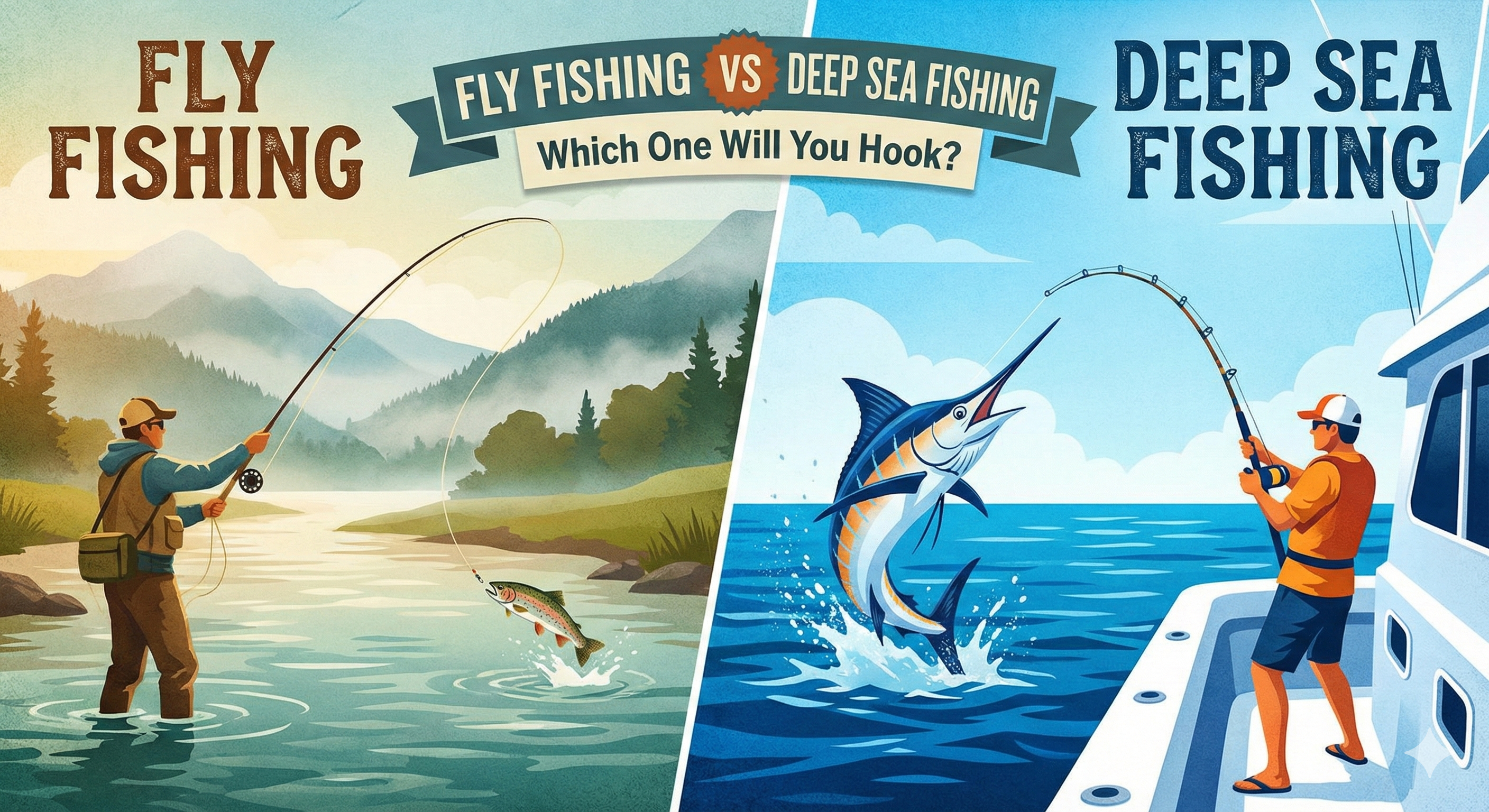
Namaste fellow Anglers Welcome back to the blog Fly Fishing vs Deep Sea Fishing.
If you’re anything like me, the very thought of holding a fishing rod and waiting for that magical tug brings a smile to your face. India is blessed with some amazing water bodies, from the icy cold rivers of the Himalayas to the vast, deep blue expanse of the Arabian Sea and the Bay of Bengal. This means we have a huge variety of fishing styles to choose from.
Today, we’re going to talk about two very different, yet equally exciting, forms of angling: the graceful art of fly fishing and the adrenaline-pumping adventure of deep-sea fishing.
It’s like comparing a classical dance performance with a high-voltage rock concert. Both are amazing music, but the experience is completely different. So, grab a cup of chai, sit back, and let’s dive into the world of fly fishing vs. deep-sea fishing to help you decide which one calls out to your angler’s soul.
The Art of Fly Fishing: Poetry in Motion
Imagine standing waist-deep in a crystal-clear river, the water cool against your legs, the only sound being the gentle rush of the stream and the chirping of birds. You make a graceful, rhythmic cast, and a tiny, feather-light “fly” lands softly on the water’s surface, just like a real insect. Suddenly, a splash! A beautiful trout has taken the bait. That, my friends, is the magic of fly fishing.
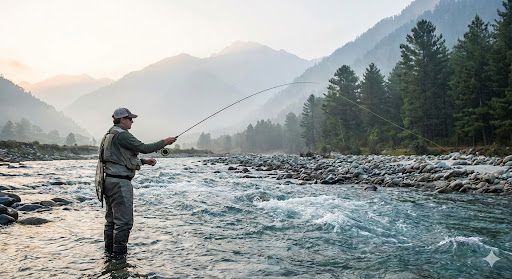
What is it?
At its core, fly fishing is about fooling a fish with an artificial “fly” made of feathers, fur, and thread, designed to look like the insects they eat. The key difference here is the casting. In regular fishing, the weight of the lure or bait pulls the line out. In fly fishing, the “fly” is almost weightless. So, you use a special, heavy fly line to cast the light fly. It’s a bit of a learning curve, like learning to ride a bike, but once you get the “feel” of it, it’s incredibly satisfying.
The Vibe:
Fly fishing is often described as meditative and peaceful. It’s an active style; you’re always moving, wading through the water, stalking your fish, and constantly casting. It connects you deeply with nature. You have to “read” the water, understand where the fish are hiding, and figure out what they are eating. It’s a game of finesse and patience.
The Thrill of Deep Sea Fishing: Battling the Giants
Now, let’s switch gears completely. Picture yourself on a powerful boat, miles away from the shore, with nothing but the endless blue ocean around you. The sun is beating down, the salt spray is on your face, and there’s an air of anticipation. Suddenly, one of the big rods bends double, the reel screams, and the captain yells, “Fish on!”. You strap yourself into a fighting chair, grab the rod, and the battle begins. This is the raw power of deep-sea fishing.
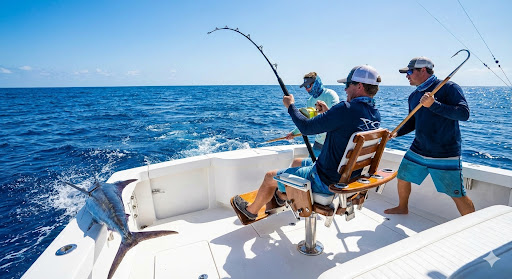
What is it?
Deep-sea fishing, also known as offshore fishing, involves taking a boat into the deep ocean waters to target large predatory fish. The techniques are different here. You might be “trolling” (dragging lures or bait behind the moving boat), “jigging” (dropping a heavy lure deep and jerking it up), or using live bait. The gear is heavy-duty because the fish you’re after are strong, fast, and can weigh hundreds of kilos!
The Vibe:
This is high-adventure stuff! It’s exciting, loud, and often a team effort. You rely on the captain’s knowledge to find the fish and the crew’s help to land them. It can be physically demanding, a real test of strength and endurance. And let’s be honest, sometimes it’s also a test of your stomach against seasickness! But the reward of catching a monster from the deep is a feeling like no other.
Head-to-Head: The Key Differences
Let’s break it down simply in a table so you can compare them side-by-side.
| Feature | Fly Fishing | Deep Sea Fishing |
| The Gear | Light & Specialized. Long, flexible rod, thick fly line, and tiny, weightless “flies”. | Heavy & Powerful. Short, stiff rods, large reels with huge line capacity, and big, heavy lures or bait. |
| The Technique | Finesse & Grace. It’s all about the art of casting the line to present the fly delicately. | Brute Force & Strategy. Trolling, jigging, or bait fishing. The fight is about muscle and endurance. |
| Target Fish | Smaller freshwater fish. Think Trout in the Himalayas, or the mighty Mahseer in our southern rivers. | Massive saltwater giants. Marlin, Sailfish, Tuna, Giant Trevally (GT), Barracuda, and sharks. |
| Location | Serene freshwaters. Rivers, streams, and sometimes lakes. You’re usually standing in the water or on the bank. | Open ocean. Far offshore, miles away from land, on a boat. |
| Activity Level | Constant movement. You’re always casting, mending the line, and wading. | Bursts of action. Lots of waiting and scanning, followed by intense, physically demanding fights. |
A Quick Look at the Costs
Let’s talk money, bhai.
- Fly Fishing: You can get started with a decent beginner’s kit (rod, reel, line) for a reasonable price. The main ongoing cost is buying or making flies, which are cheap. However, like any hobby, high-end gear can get very expensive. The biggest cost might be travel to good trout or mahseer locations.
- Deep Sea Fishing: This is generally the more expensive option. The gear itself is costly, but you usually don’t need to buy it as it’s provided by the charter boat. The main expense is hiring the boat and crew for the day, plus fuel costs, which can add up. It’s more of a planned “trip” budget rather than a weekend hobby cost.
Fishing in India: Where to Go?
We are lucky to have world-class spots for both in our own backyard!
For Fly Fishing:
- North India: The states of Himachal Pradesh (Tirthan Valley, Sainj Valley), Uttarakhand, and Kashmir are famous for Brown and Rainbow Trout. The scenery is breathtaking.
- South India & Northeast: Rivers like the Kaveri (Cauvery) in the south and rivers in Arunachal Pradesh are legendary for the mighty Golden Mahseer, one of the hardest-fighting freshwater fish in the world.
For Deep Sea Fishing:
- Andaman & Nicobar Islands: This is hands-down the best spot in India for big game fishing. You can target monster GTs, Tuna, Marlin, and Sailfish here.
- Lakshadweep Islands: Another paradise with pristine waters and amazing marine life.
- Coastal India: Places off the coast of Goa, Chennai, and Pondicherry also offer great deep-sea fishing opportunities, especially for species like Kingfish, Barracuda, and Tuna.
Conclusion: Which One Should You Choose? Fly Fishing vs Deep Sea Fishing
So, fly fishing or deep-sea fishing? There’s no right or wrong answer. It all depends on what you are looking for.
- Choose Fly Fishing if: You love peace and quiet, enjoy a technical challenge, want to connect with nature, and prefer an active, wading-style of fishing in beautiful rivers. It’s food for the soul.
- Choose Deep Sea Fishing if: You crave adventure, an adrenaline rush, love being on the open ocean, and dream of a gladiator-style battle with a giant fish. It’s a thrill-seeker’s paradise.
My advice? Why limit yourself? Try both! Each offers a unique experience that will make you a better and more well-rounded angler.
Start with what seems more accessible to you right now. Maybe a trip to a nearby river to try your hand at casting, or book a charter on your next beach holiday.
Whatever you choose, tight lines and happy fishing! Don’t forget to share your catch photos in the comments below.
Cheers,
Your desi fishing buddy.